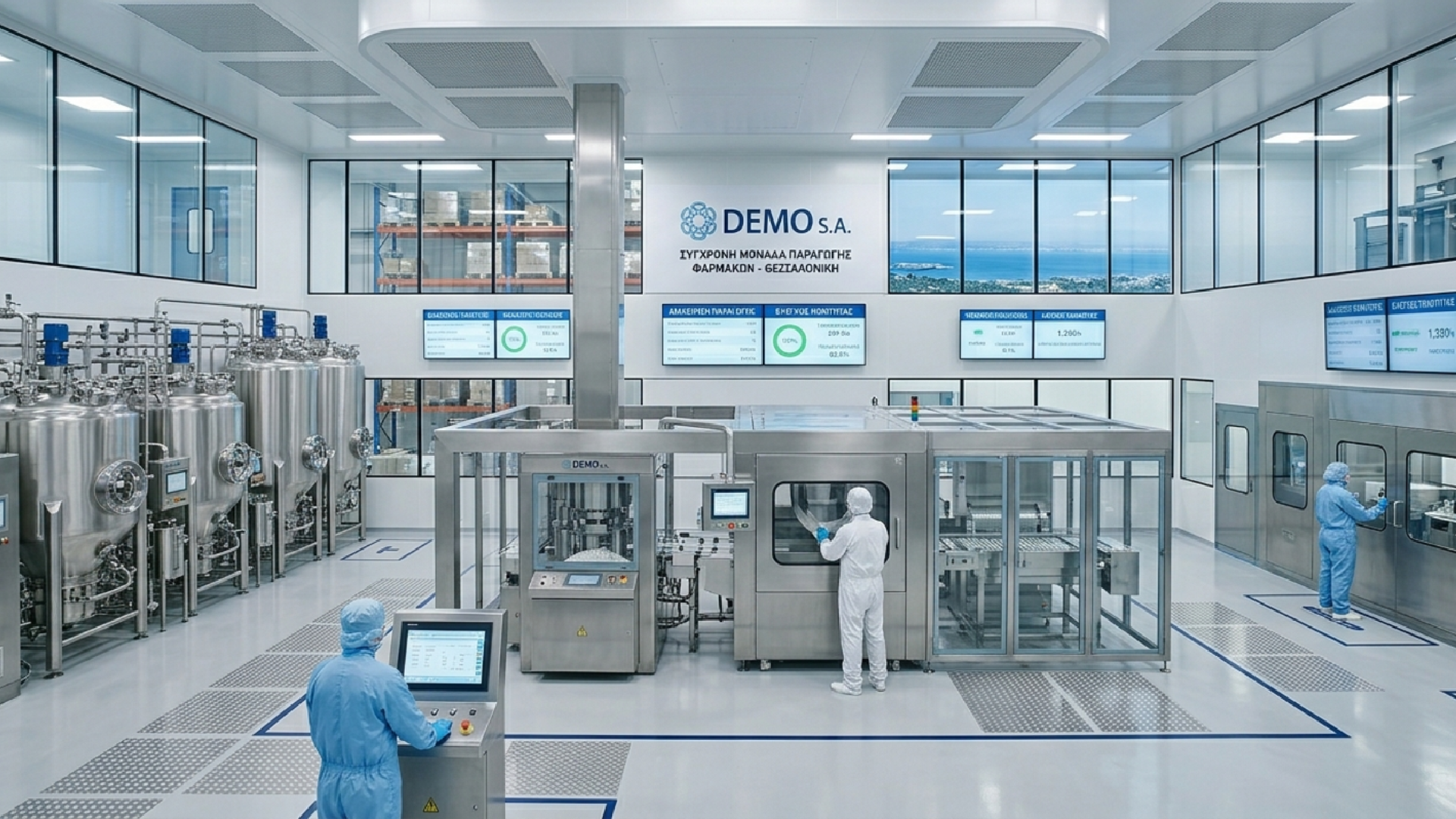
Greece is an established EU pharmaceutical manufacturing destination, with exports reaching approximately €3.4 billion in 2024 and a growing cluster of over 50 licensed facilities concentrated in Northern Greece — particularly the Thessaloniki–Sindos–Kalochori industrial corridor. Foreign manufacturers investing under the Development Law (Law 4887/2022, as amended) can access grants covering 45–70% of eligible capital expenditure depending on zone classification, plus a tax exemption — a capped approved amount of aid, usable over up to 15 tax years, not fifteen years of zero tax. The EU GMP regulatory framework, direct EDQM-registered production capacity, and Greece’s position as a gateway to MENA and Balkan markets make this one of Europe’s underpriced pharmaceutical manufacturing locations.
Why Greece Is a Serious Pharmaceutical Manufacturing Location
Most investors researching pharmaceutical manufacturing in Southeast Europe default to considering larger markets. That is a miscalculation. Greece operates inside the EU regulatory perimeter, which means product manufactured here enters European and international markets with full GMP certification and EDQM (European Directorate for the Quality of Medicines) standing — the same standard as Germany or France, at a structural cost 35–45% lower.
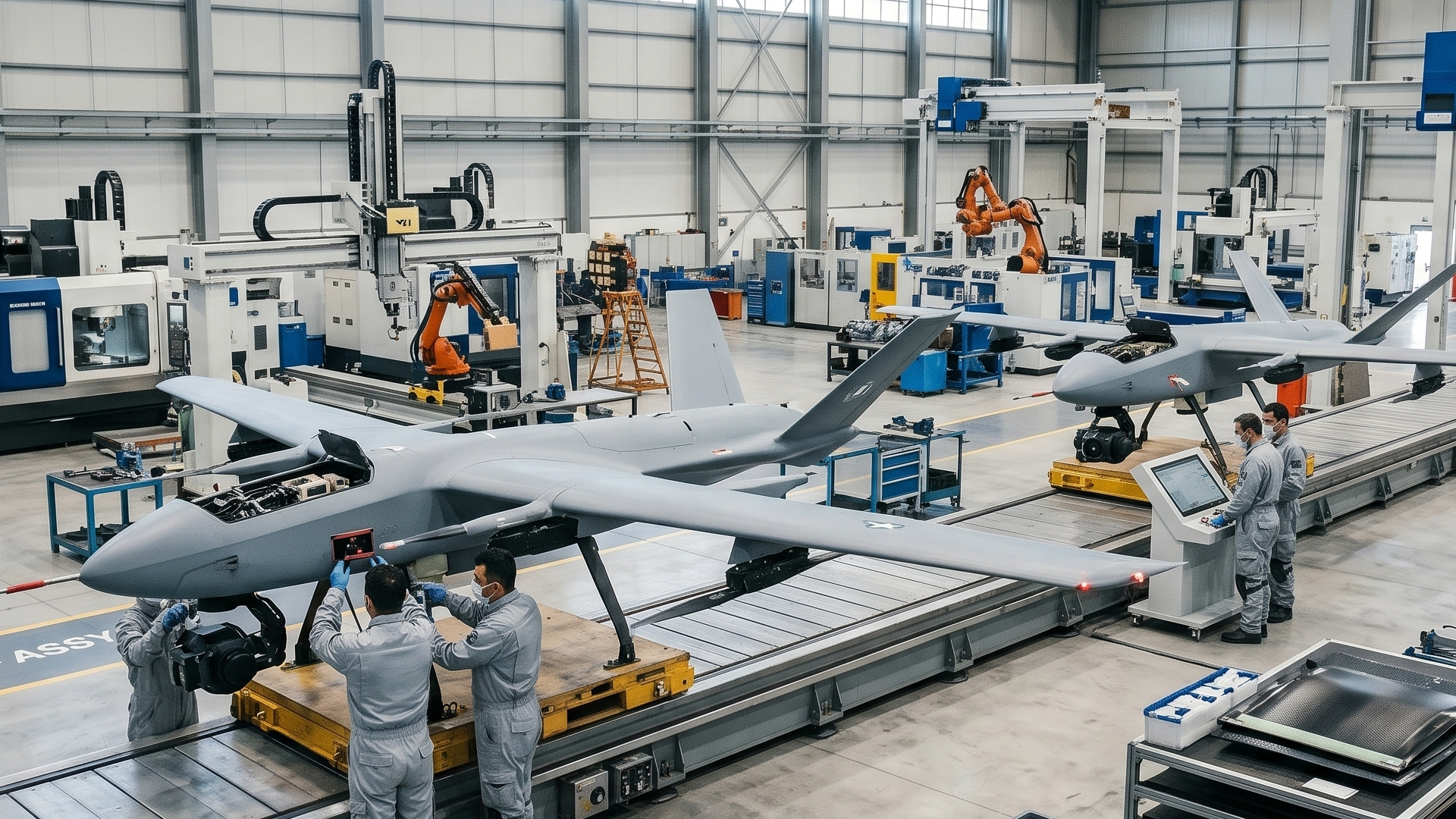
The Greek pharmaceutical sector is not a cottage industry. The country is home to active API (active pharmaceutical ingredient) production, finished dosage form manufacturing, biosimilar development, and contract manufacturing operations. The sector accounts for roughly 3% of Greek GDP and is one of the few industrial categories where Greece runs a consistent trade surplus — exporting to over 100 countries.
Key Data: Greek Pharmaceutical Sector at a Glance
| Metric | Value | Source / Note |
|---|---|---|
| Pharmaceutical exports (2024 est.) | ~€3.4 billion | SFEE / Panhellenic Exporters Association data |
| Licensed manufacturing facilities | 50+ | EODY / EMA-registered sites |
| Development Law grant ceiling (Zone D) | 70% of eligible capex | Law 4887/2022, as amended, Article 17 |
| Tax exemption duration | 15 years | Development Law baseline |
| Labour cost vs Western Europe | 35–45% lower | Eurostat 2024 comparative labour cost index |
| ESPA R&D co-funding ceiling | Up to 80% for qualifying R&D | ESPA 2021–2027 / Thematic Priority 1 |
| GMP framework | EU GMP (EudraLex Vol. 4) | Full EU regulatory alignment |
The India–Greece Pharma Manufacturing Corridor
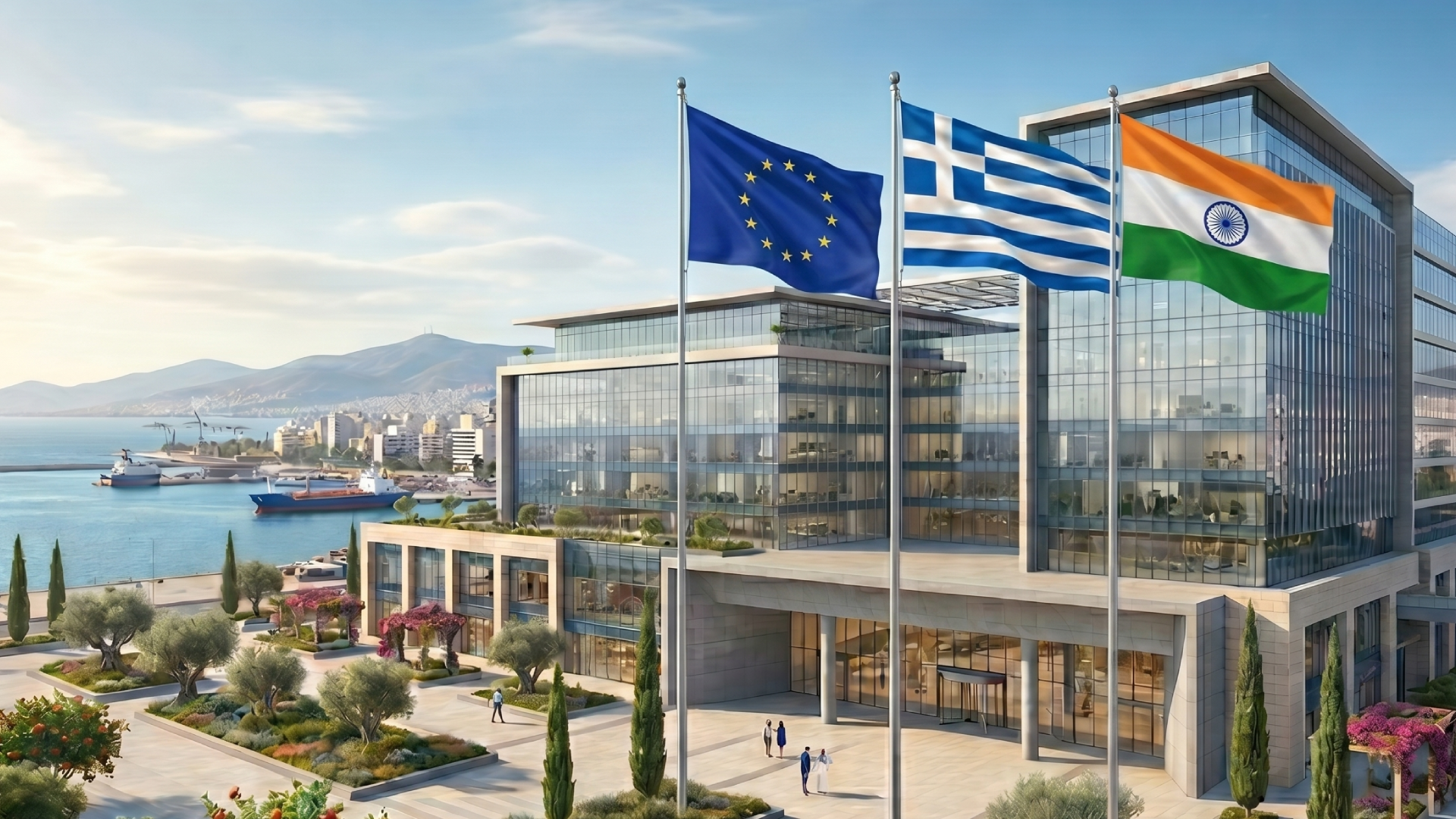
The most significant structural opportunity in Greek pharmaceutical manufacturing is the India–Greece axis. Indian generic and biosimilar manufacturers have identified Greece as a strategic EU entry point: a cost-competitive manufacturing base inside the European regulatory perimeter, with port access via Thessaloniki and Piraeus, and a bilateral investment treaty framework through the EU–India trade relationship.
Several landmark transactions have validated this thesis. The INDELLAS case — a joint venture between Indian pharmaceutical interests and Greek industrial partners establishing API and finished dosage form capacity in Northern Greece — demonstrated the full stack of available incentives: Development Law grants at the Zone D ceiling, ESPA co-funding for laboratory infrastructure, and expedited GMP licensing through the Greek National Organization for Medicines (EOF).
This transaction is documented in our case study series. The full breakdown — including the capital stack structure, approval timeline, and grant amount secured — is available at Pharma Corridor Case Study.
The corridor works because of a specific arbitrage: Indian manufacturers hold the formulation IP and production expertise; Greece provides the EU GMP address, the blended finance stack, and the distribution gateway. Neither side fully replicates what the other brings. That is a durable structural advantage — not a temporary incentive window.
Pharma Manufacturing Investment Greece: Available Incentives
Development Law 4887/2022, as in force — the Primary Tool
The Greek Development Law (Law 4887/2022, as amended, Government Gazette A’ 87/02.06.2025) is the principal instrument for incentivising new manufacturing capacity. Pharmaceutical manufacturing qualifies under the “Manufacturing and Supply Chain” aid scheme. The grant structure operates on a zone-based system:
- Zone A (Attica/major urban centres): 25–35% of eligible capex
- Zone B (mid-tier regions): 35–45% of eligible capex
- Zone C (peripheral regions): 40–55% of eligible capex
- Zone D (border regions, islands, mountainous areas): 45–70% of eligible capex
Eligible expenditure includes: land purchase (within limits), civil construction, machinery and equipment, intangible assets, and employment costs for new positions created. For a €10 million pharmaceutical manufacturing investment in Zone D, this translates to €4.5–7 million in non-repayable grant funding — contingent on maintaining investment levels and job creation for five years post-completion.
Aggelakakis & Associates holds a 100% Development Law application approval rate across all submitted mandates. We do not accept mandates where the preliminary eligibility assessment indicates a material approval risk.
ESPA 2021–2027 — R&D and Digital Infrastructure Co-Funding
The European Structural Funds programme for Greece (ESPA 2021–2027) allocates specific windows for pharmaceutical R&D, quality systems, and digital infrastructure. Key categories relevant to pharma manufacturing investors:
- Research and Innovation (Thematic Objective 1): Co-funding up to 80% for qualifying R&D activities, clinical trial support infrastructure, and new product development. Minimum eligible project: €200,000.
- Productive Transformation (Thematic Objective 2): Equipment modernisation, ERP/MES system deployment, and GMP-compliance infrastructure. Co-funding rates: 40–60%.
- Just Transition Fund (JTF): For investments in specific transition regions — Kozani, Florina — with elevated co-funding rates targeting industrial diversification away from lignite-dependent sectors.
ESPA funds cannot be combined with Development Law grants on the same budget line, but they can be stacked on separate eligible cost categories within the same project — a capital stack structure our team optimises during the pre-application phase.
Industrial Zones: Northern Greece’s Pharma Cluster
Site selection for pharmaceutical manufacturing is not a generic industrial property decision. GMP compliance imposes specific requirements on building specification, clean room infrastructure, utilities reliability, and logistics connectivity. Northern Greece has three primary industrial zone options for pharma manufacturing investors:
BIPE Thessaloniki (Business and Industrial Park of Economou)
The primary industrial zone serving Thessaloniki, with existing pharmaceutical tenants and GMP-compliant shell-and-core buildings available on long-term lease or purchase. Thessaloniki Port (100km road, with direct rail connection) enables container export to 70+ countries. The zone has established utilities infrastructure — tripled power supply, industrial-grade water treatment, broadband — and is inside the Thessaloniki Customs-Free Zone perimeter for import of raw materials.
Sindos Industrial Zone
Located 15km west of Thessaloniki, Sindos is Greece’s oldest and largest organised industrial zone, with approximately 400 operating businesses across manufacturing categories. Pharma presence includes API producers and packaging operations. Land acquisition costs are materially lower than BIPE. Zone D classification for Development Law purposes applies across significant portions of the available land bank.
Volos Industrial Zone (BIPE Magnesia)
For investors prioritising Aegean sea export lanes over the Balkan land corridor, the Volos industrial zone — served by the Port of Volos — provides an alternative logistics configuration. The port handles Ro-Ro, container, and bulk cargo with direct ferry connections to the Aegean islands and Turkey. Zone C classification for Development Law purposes.
EU GMP Regulatory Framework for Foreign Manufacturers
GMP certification for a Greek manufacturing facility is governed by EudraLex Volume 4 (EU Good Manufacturing Practice Guidelines) and administered by the Greek National Organization for Medicines (EOF — Ethnikos Organismos Farmakon). EOF is an EMA-recognised national competent authority, and GMP certificates issued under its authority are mutually recognised across all 27 EU member states.
The GMP licensing timeline for a new facility in Greece runs approximately 18–24 months from construction completion to first GMP batch release. This includes the pre-authorisation inspection phase, quality system documentation review, and the mandatory validation batches. For investors establishing a manufacturing subsidiary through an existing GMP-certified Indian or EU company, a Mutual Recognition Agreement (MRA) process applies that can materially reduce this timeline.
Foreign investors establishing manufacturing operations in Greece must also obtain a Manufacturing Authorisation (MA) from EOF — a separate instrument from GMP certification — and comply with the EU Falsified Medicines Directive (FMD) serialisation requirements from day one of commercial production.
How to Invest in Pharmaceutical Manufacturing in Greece: 5 Steps
The sequence below reflects the Aggelakakis 360° Investment Readiness Protocol applied specifically to pharmaceutical manufacturing mandates. Each step has defined inputs, outputs, and decision gates.
- Investment Readiness Screening (Week 1–2): A 30-minute structured consultation to assess eligibility under the Development Law, confirm zone classification for the preferred site, and identify any AML/KYC pre-conditions that need resolution. This stage produces a preliminary Investment Readiness Index score (IRI™ 0–100) and a go/no-go recommendation before any capital is committed. Mandates scoring below 45 are not accepted.
- Capital Stack Engineering (Week 3–6): Define the optimal mix of equity, Development Law grants, ESPA co-funding, and bank debt. For a typical pharmaceutical manufacturing project of €5–20M total investment, the blended finance stack reduces effective equity deployment by 40–65%. This stage produces a Capital Stack Map — every financing instrument with estimated amount, approval timeline, and cost of capital.
- Corporate and Legal Structuring (Week 4–8): Establish the optimal Greek legal entity (typically AE or IKE for foreign manufacturing subsidiaries), secure necessary licences (Manufacturing Authorisation from EOF, environmental permits, building permits for industrial use), and complete AML/KYC documentation under AMLD5/6. For Indian investors, this includes bilateral investment treaty analysis and profit repatriation structure under the Greece–India DTAA.
- Development Law Application Submission (Month 3–5): Prepare and submit the investment plan to the Ministry of Development. The application requires a fully costed five-year business plan, environmental impact assessment, and proof of financial capacity (minimum 25% self-financing of total project cost). Aggelakakis & Associates manages the end-to-end submission process and post-submission follow-up with the evaluating authority.
- GMP Licensing and First Production (Month 12–30): Coordinate the EOF pre-authorisation inspection process, manage quality system documentation (SOPs, validation master plan, site master file), and execute the first qualification and validation campaign. Post-GMP-certificate, first commercial batches can be released for EU market distribution.
Pharma Manufacturing Investment Greece: Frequently Asked Questions
What is the minimum investment size for the Greek Development Law in pharma manufacturing?
The Development Law sets no sector-specific minimum for pharmaceutical manufacturing. The general minimum eligible investment is €250,000 for small enterprises and €500,000 for medium enterprises. For foreign investors establishing a new manufacturing subsidiary, projects below €2M in total eligible expenditure rarely achieve a financially viable grant-to-overhead ratio. Our preliminary assessment screens for economic viability before any application is prepared.
Can Indian pharmaceutical companies apply for Development Law grants directly?
Yes. Foreign-owned companies incorporated in Greece are fully eligible for Development Law grants. The standard structure is to incorporate a Greek subsidiary (AE or IKE) with the Indian parent holding majority or full equity. The subsidiary then applies as the Greek legal entity. There is no requirement for Greek shareholder participation, though joint venture structures with local partners can facilitate site access and regulatory navigation. The equity contribution requirement (minimum 25% of total eligible investment) must be demonstrated through the Greek entity’s equity — parent company loans do not qualify as equity contribution.
How long does Development Law grant approval take for a pharma project?
The evaluation period for Development Law applications in the manufacturing sector currently runs 4–8 months from submission to approval decision, depending on the evaluating body’s workload and the quality of the application file. A well-prepared application with all supporting documentation — business plan, financial projections, environmental documentation, site permits — consistently reaches the shorter end of this range. Aggelakakis & Associates has not had a Development Law application for a pharmaceutical mandate rejected since the methodology was formalised.
What does GMP certification in Greece cost and how long does it take?
EOF inspection and certification fees are set by ministerial decree and are substantially lower than equivalent processes in Western European jurisdictions. The total direct regulatory cost for a first-time Manufacturing Authorisation and GMP certification is typically €15,000–45,000 in government fees, depending on the scope of activities and number of dosage forms. Indirect costs — quality management system setup, validation campaigns, consultant fees — are the dominant budget line and typically run €200,000–800,000 for a new facility of 2,000–5,000 sqm. The timeline from facility completion to GMP certificate is 18–24 months.
Can pharma manufacturing grants be combined with ESPA R&D funding?
Development Law grants and ESPA co-funding cannot be applied to the same eligible cost line within a project. They can, however, be applied to different cost categories within the same investment project — a technique called “blended finance stacking.” A typical structure applies Development Law grants to civil construction and equipment capex, while ESPA R&D funds cover laboratory infrastructure, quality testing equipment, and digital MES/ERP systems. Our Capital Stack Engineering service defines this split during pre-application planning to maximise total public funding received.
Start Your Investment Readiness Screening
A 30-minute structured screening call establishes whether your pharmaceutical manufacturing project qualifies for Development Law grants, which zone classification applies to your preferred site, and what a realistic capital stack looks like before you commit to a site visit or legal costs.
Aggelakakis & Associates operates from Athens · Thessaloniki · Munich · New Jersey · Mumbai — with a strategic partnership in Melbourne: 6 hubs · 5 countries. We are members of AmCham Greece and AHK Germany. Our founder holds an MBA from Oxford Brookes University. We do not accept mandates we cannot win.